
Running On Empty
Donna e-mailed me last week telling me Michael Moore had put up a post on his website that made her skin crawl. It took me until the weekend to read it. And I must confess myself ... disappointed.
The post is Michael Moore celebrating the collapse of General Motors and asking where we should go next. For a man who claims to be from Flint and to know the car industry, it shows a stunning lack of knowledge. This ignorance is combined with pure economic stupidity and a stunning faith in the power of government to make things happen just by wishing so.
Michael Moore is 55 years old. He is a highly successful film-maker, and one of the few who understands the financial benefit of tacitly allowing his films to be pirated. He has been a political force for the last decade or more. And yet, given months to think about it, he’s produced a “plan” for GM’s bankruptcy that looks like something a 19-year-old college kid would write the night before a deadline. It has no original ideas; it’s just a liberal wish list. It does not acknowledge tradeoffs or problems; it lives in fantasy world. It practically refutes itself.
If you don’t want to read the fisking, here’s the short version: Mike wants Barack Obama to declare himself Czar of the United States and reorganize industry, infrastructure and the economy along the lines Michael Moore thinks best. He doesn’t, of course, say he wants a dictatorship but that’s the only possible interpretation. Because there is no way that what Michael proposes could be done in our current Constitutional Republic. Such sweeping changes would only be possible if government broke all the boundaries of the Constitution, the law and federalism.
Here we go. Mike asks why GM failed:
It refused to build automobiles that the public wanted, cars that got great gas mileage, were as safe as they could be, and were exceedingly comfortable to drive. Oh—and that wouldn’t start falling apart after two years.
Ignore for the moment, that “great gas mileage” and “as safe as they could be” may be competing, not complementary goals (the safety of SUVs is highly questionable, but the lack of safety of small light cars is not). The problem with this statement is that GM was was building the cars Americans wanted—big inefficient gas-guzzling SUVs. Fuel-efficient cars, until last year’s oil spike, sat unwanted on lots. And even now, sales have dropped and the so-called “smart cars” are not selling.
This is a pity because Americans should want fuel efficient cars. I just sold my 1995 Saturn and it was lovely car—safe, fuel efficient and cheap. The price of oil is not going to stay low and so my next car will inevitably be something along the same lines.
But the fact is that most Americans do not want those kinds of cars. And they certainly don’t want the little tin econoboxes that our government is about to force onto us.
And it was hell-bent on punishing its unionized workforce, lopping off thousands of workers for no good reason other than to “improve” the short-term bottom line of the corporation.
Pure lies. As Michael is well aware, the Big Three had an extremely cozy relationship with the unions for decades. The biggest reason they are crumbling now is because, during those years, they foolishly made tens of billions of dollars in future commitments to the unions. Workers got high salaries, generous benefits and could retire relatively young with a pension equal to their working pay. They even get paid when the factories are idle.
This was sustainable for a long time because Detroit was effectively a monopoly. The Big Three did not compete on labor costs (or reliability) because they had a captive market in the American public. They could charge high prices for cars because there was no competition. When foreign companies breached the American market with cheaper more reliable cars, that system collapsed. By the 1990’s, the Big Three were using cars a loss leader to sell financing.
Moore notes that GM laughed at “inferior” Japanese and German cars. The reason those cars are successful, Michael, is because the unions have had far less influence. Their pension and healthcare commitments are far smaller, which is why their effective cost per hour of making a car is so much smaller.
Beginning in the 1980s, when GM was posting record profits, it moved countless jobs to Mexico and elsewhere, thus destroying the lives of tens of thousands of hard-working Americans. The glaring stupidity of this policy was that, when they eliminated the income of so many middle class families, who did they think was going to be able to afford to buy their cars?
More economic ignorance. Cheaper manufacturing means cheaper cars (and therefore, an ability to compete with Japan and Germany). It also means that while the auto-workers are hurt, other industries boom because of cheaper transportation—industries that can then hire the displaced auto workers.
In addition, Michael completely ignores insourcing. Many of the plants GM opened overseas were to manufacture cars for sale in those countries —a sound practice, but one actively enouraged by nitwit protectionism and foolish tax laws. Moreover, just as we have opened factories in other countries, the system of capitalism has allowed companies like Nissan and Toyota to open factories in this country. But without the legacy of old union contracts, those factories turn a profit.
So here we are at the deathbed of General Motors. The company’s body not yet cold, and I find myself filled with—dare I say it—joy. It is not the joy of revenge against a corporation that ruined my hometown and brought misery, divorce, alcoholism, homelessness, physical and mental debilitation, and drug addiction to the people I grew up with. Nor do I, obviously, claim any joy in knowing that 21,000 more GM workers will be told that they, too, are without a job.
Actually, considering how much Michael loves to wallow in other people’s suffering, I think he does feel some joy about these things. He’s made a career exploiting tragedy, from laid-off workers to gunshot victims to the uninsured. And he sure as hell enjoys blaming those tragedies on his political opponents.
Saving our precious industrial infrastructure, though, is another matter and must be a top priority. If we allow the shutting down and tearing down of our auto plants, we will sorely wish we still had them when we realize that those factories could have built the alternative energy systems we now desperately need. And when we realize that the best way to transport ourselves is on light rail and bullet trains and cleaner buses, how will we do this if we’ve allowed our industrial capacity and its skilled workforce to disappear?
It’s not that simple to bend sword into plowshares (or cars into trains). You’re talking about an enormous investment of infrastructure in an area of the country that is hemorrhaging workers, capital and education. Detroit may not be the ideal place to build those things, anyway, especially given the horrendous tax situation in Michigan. Finally, many of the jobs for bullet trains and light rail need to be where these things would be built—on the coasts.
We can’t just pick communities and order industry to build there. That’s a good way to hamstring an economy.
Twenty years ago when I made “Roger & Me,” I tried to warn people about what was ahead for General Motors. Had the power structure and the punditocracy listened, maybe much of this could have been avoided.
I have not seen Roger and Me. But if Michael was warning us that overly generous union benefits would make cars a loss-leader for the Big Three, I will eat my copy of Do As I Say, Not As I Do. It wasn’t outsourcing that killed GM; it was a change in the marketplace. Their business model—a model based partially on hefty union benefits—became outdated and unsustainable.
Based on Michael’s “expertise”, he suggests what we need to do now. His plan is as bold, as ignorant and as doomed to fail as any “Five Year Plan” that ever emerged from the Soviet Union. Michael envisions the government completely reworking the economy, trampling thousands of laws and the liberties of millions of people—all to create his vision. There are no caveats—no acknowledgement of uncertainty—no indication that this may not work. Michael believes in this with a fervor that would make the most End of Days Christian blush. He really thinks we can do all these things just be wishing for it be so.
1. Just as President Roosevelt did after the attack on Pearl Harbor, the President must tell the nation that we are at war and we must immediately convert our auto factories to factories that build mass transit vehicles and alternative energy devices. Within months in Flint in 1942, GM halted all car production and immediately used the assembly lines to build planes, tanks and machine guns. The conversion took no time at all. Everyone pitched in. The fascists were defeated.
We also had a shocking amount of debt and an economy that, while producing nominal growth, produced little improvement in American lives. Moreover, we were at war for our very existence. Wasting billions of dollars was not an issue because FDR understood that there is nothing more expensive than a second-rate military. Everything was sacrificed for the war effort. And even then, the effort was heavily dependent on Americans freely donating scrap, rubber, metal, even cooking grease and buying the hell out of bonds. Our entire economy was turned over to war. Our current situation is not even close.
And Michael take the wrong lesson from history. It’s relatively easy to have a car factory churn out jeeps and tanks—the skills needed are very similar. Alternative energy is a completely different industry—and requires very different skills from the workers. The people that build cars may not have the skills to build solar panels. In a free market economy, those jobs would be taken by people who do have those skills and the auto workers would find jobs that exploit the skills they have. In economic circles, it’s called the Law of Comparative Advantage and it is the principle reason why capitalism works as well as it does.
This current war has two fronts. One is headquartered in Detroit. The products built in the factories of GM, Ford and Chrysler are some of the greatest weapons of mass destruction responsible for global warming and the melting of our polar icecaps. The things we call “cars” may have been fun to drive, but they are like a million daggers into the heart of Mother Nature. To continue to build them would only lead to the ruin of our species and much of the planet.
Apparently, we should go back to transporting food to the hungry people of the world by pack mule.
I will not stand for this slander. The automobile is one of the greatest inventions in human history. It has generated astonishing human wealth and progress by liberating people from the confines of geography. It has made mobile the greatest resource we have—human beings—and therefore made us all rich by any historical standard. It abolished the horse and the manure-spread epidemics that used to ravage cities. Even if we accept global warming—and I do—cars are a small part of the overall picture. What is it with Left and demonizing cars?
The other front in this war is being waged by the oil companies against you and me. They are committed to fleecing us whenever they can, and they have been reckless stewards of the finite amount of oil that is located under the surface of the earth. They know they are sucking it bone dry. And like the lumber tycoons of the early 20th century who didn’t give a damn about future generations as they tore down every forest they could get their hands on, these oil barons are not telling the public what they know to be true—that there are only a few more decades of useable oil on this planet. And as the end days of oil approach us, get ready for some very desperate people willing to kill and be killed just to get their hands on a gallon can of gasoline.
It’s worth pointing out here that the vast majority of the world’s oil companies are state-owned and state-run. To the extent that have despoiled the Earth, it has been largely a political hand at the till.
Moreover, the evil oil companies have never held a gun to our head and forced us to drive. All they did was make cheap energy readily available, to the benefit of billions who have used that energy to get clean food and clean water; to educate themselves; and to lift themselves out of poverty. The engine of human progress has been driven by fossil fuels and I have no problem with people making money off of that. That’s not even to mention that petroleum products, like plastic, that have made our lives infinitely better and safer.
Fossil fuels may have outlived their ecological welcome. But their exploitation made the 20th century the best in human history, despite the predations of the powerful governments Mikey loves so much. It made people rich enough that war became too much of a hassle; healthy enough that most of us will die of old age; educated enough to understand the world we live in; and fed enough that obesity is our biggest health concern.
I don’t like all the practices of the oil companies myself. I have no illusions about the dark side of capitalism. But the oil companies’ greed and their chicanery has, as Adam Smith predicted, inadvertantly benefited us all.
And to hear “didn’t give a damn about future generations” from a man who is advocating a massive expansion of debt and the crippling of healthcare innovation through socialized medicine is offensive.
2. Don’t put another $30 billion into the coffers of GM to build cars. Instead, use that money to keep the current workforce—and most of those who have been laid off—employed so that they can build the new modes of 21st century transportation. Let them start the conversion work now.
I agree that we shouldn’t give any more money to GM. But this is a repeat of point 1. Moreover, what Michael is talking about will cost many many times what we’re proposing to give GM.
3. Announce that we will have bullet trains criss-crossing this country in the next five years.
This is hilarious. Five years would not even be enough time to get the land-use permits, least of all build a massive train system. The last major work we had in this vein was the interstate system. As you may have noticed, it’s still being built. Creating a rail system that fast—over multiple states, through many districts, over private and public land—some of which has been set aside as nature preserves—would only be possible in a dictatorship. That’s the only way to bulldoze the thousands of competing and legitimate interests along with the forests and wetlands the rail would need to go through.
And it’s not cheap. The cost, if you extrapolate California’s projections for the Vegas line, would be north of $500 billion just for the modest proposals we have right now. For that price, we could practically buy ever American an electric car.
High speed rail always sounds good but it is the perpetual pipe dream. Every proposal (and Obama’s is just a recycled version of Bush’s) comes to nothing. Even the current proposals aren’t high speed, as such. They meander through various congressional districts and can therefore not maintain a high speed.
They’re not even clean:
According to the Department of Energy, the average Amtrak train uses about 2,700 British thermal units (BTUs) of energy per passenger mile. This is a little better than cars (about 3,400 BTUs per passenger mile) or airplanes (about 3,300 BTUs per passenger mile). But auto and airline fuel efficiencies are improving by 2 percent to 3 percent per year (for example, a Toyota Prius uses less than 1,700 BTUs per passenger mile).
By contrast, Amtrak’s fuel efficiency has increased by just one-tenth of 1 percent per year in the past 10 years.
This means, over the lifetime of an investment in moderate-speed trains, the trains won’t save any energy at all. In fact, to achieve higher speeds, moderate-speed trains will require even more energy than conventional trains and probably much more than the average car or airplane 10 or 20 years from now.
Michael compares us to Japan (liberals always love anything from Japan). This is incredibly stupid. Japan has ten times our population density. Japan does not have massive stretches of unoccupied land. High speed rail works—in a limited context—in Japan. Even then, 80% of their rail service is traditional rail. And Tokyo is not exactly known for its light traffic.
High-speed rail, if it actually came to pass, might work in some of the more high-density areas of the US, like the coasts. But as a national solution to move three hundred million people and unthinkable tons of freight, it’s bollocks.
4. Initiate a program to put light rail mass transit lines in all our large and medium-sized cities. Build those trains in the GM factories. And hire local people everywhere to install and run this system.
Jobs jobs jobs. Who cares if it works? It’s all just a jobs program.
Light rail has proven to be an economic disaster with little to no benefit to the environment. Cities that can benefit from rail—like New York—have already built it. In most American cities, people prefer to drive. So you’re spending energy building and running a light rail system that carries very few passengers. In order to make it work, you are going to have to force people to ride it.
5. For people in rural areas not served by the train lines, have the GM plants produce energy efficient clean buses.
A gigantic waste of money. And with little ecological benefit. I live in a small town that has a very good bus system. I still have to drive a lot. The only reason it works at all is because this a college town and many students do not have or need cars. This would not be the case in most cities. And it does not benefit the environment to have empty buses rattling down the roads.
6. For the time being, have some factories build hybrid or all-electric cars (and batteries). It will take a few years for people to get used to the new ways to transport ourselves, so if we’re going to have automobiles, let’s have kinder, gentler ones. We can be building these next month (do not believe anyone who tells you it will take years to retool the factories—that simply isn’t true).
As I noted above, we can’t even sell the electric and hybrid cars we already have. Are you going to force people to buy these cars? Are you going to impose trade restriction to keep Japan, Korea, China, Germany, Italy, France and the UK from selling us the cars we actually want? Where is this massive increase in the power output of our electrical grid going to come from? Even if we start a crash course of building alternative energy, it will be decades before it comes on line.
7. Transform some of the empty GM factories to facilities that build windmills, solar panels and other means of alternate forms of energy. We need tens of millions of solar panels right now. And there is an eager and skilled workforce who can build them.
Where are you going to put the solar panels and windmills, Michael? In deserts? On mountains? The environmentalists are opposed to that. Moreover, neither solar nor wind is mature enough to take over our energy structure. We have no way to efficiently get that power to the cities or to store it for use on cloudy windless days.
There are huge advances yet to be made in energy transfer and storage before solar and wind power are even remotely viable. Simply waving your hands does not make the huge technological hurdles disappear.
And again, it takes years to get things built. Even if we shoot all the environmentalists so that we can build in isolated areas, we will need years just to build the transmission lines. What are we going to do with those solar panels in the meantime? Stack them up in warehouses?
8. Provide tax incentives for those who travel by hybrid car or bus or train. Also, credits for those who convert their home to alternative energy.
Uh, Mike? I realize you probably don’t fill out your own taxes. But we’re already doing that.
9. To help pay for this, impose a two-dollar tax on every gallon of gasoline. This will get people to switch to more energy saving cars or to use the new rail lines and rail cars the former autoworkers have built for them.
Finally, we get to the way Michael intends to coerce people into buying shitty cars, riding on energy-guzzling trains and moving to cities serviced by trains. He’s going to tax the hell out of them. Never mind the crippling effect this will have on poor people who can not afford the new cars or do not live where these fancy rail lines are going to run.
Remember this, as well: high-speed rail will mostly service the coasts, not in the midwest. So people in New York will get cheap rail payed for by the gas bills of people in the heartland. That’s a great way to save Flint.
Here’s his conclusion:
It’s a new day and a new century. The President—and the UAW—must seize this moment and create a big batch of lemonade from this very sour and sad lemon.
They can. By not trying to run an economy based on politics and wishcasting.
60% of GM is ours. I think we can do a better job.
Just Like we did with Amtrack. Or the Synthetic Fuels Corporation. Or ethanol. Or the post office. Or the VA hospitals. Or Medicaid. Or…
(Final note: if you like the content here, please help with our server drive).
Comments
Unbelievable that Moore hails mass transit as the future of America, or that it will replace the automobile in terms of profitability. Did he study Amtrack AT ALL?!?
L.A. had the Red Car, but they removed it. The San Francisco Area has BART, and they’ve been trying to expand it down to San Jose for years, but all the red tape between the various government agencies involved has made it almost impossible.
The bottom line is that Moore is an idiot. I doubt he even believes half of the crap that spills out of his mouth anyway.
Let’s look at this from a practical level:
Has anybody ever gone shopping at the grocery store after work using the bus?
I have when I was younger (crashed my car, suspended license).
I’d wait for a bus after work at a bus stop I had to walk to (one quarter mile). Also, the bus route involved a transfer so I had to wait for two buses (sometimes, the first bus would run late and I’d wait even longer for the second bus). After the second bus, I’d get off at a stop closer to the store but further from the stop next to my apartment to buy a bunch of shit. Since I couldn’t carry a bunch of bags with me, there was a limit to what I could buy. I had to shop almost everyday and I couldn’t buy it in bulk. This led to a much higher monthly grocery bill. I had to lug the shit from the store to my apartment which was a half mile away. Can you imagine the anger when a bag breaks and the milk and eggs spill all over the place? Not to mention that this is also more wasted money.
It sucked big time. I hated not being able to go where I wanted when I needed to. It was so damned inconvenient to rely on public transportation. I felt like I was trapped.
Not to mention, that I had to leave earlier to get to work and considering that there was a transfer and buses are known to run late, I REALLY had to leave early to guarantee that I was on time.
I couldn’t wait to get a new car and be able to drive again.
In Moore’s defense, Balcatar, LA’s red car, like most trolley systems in this country, was deliberately destroyed by the automotive companies. Google Great American Streetcar Scandal.
I don’t think the streetcar system would have remained viable anyway—even San Fran’s is more of a novelty. But it was certaintly helped on the way to the grave by corporate shenanigans.
Google Great American Streetcar Scandal.
I did just that and was constantly met with the following quote: It is alleged by historians that NCL’s companies had an ulterior motive to forcibly gain mass use of the automobile among the U.S. population by buying up easy-to-use mass light rail transportation countrywide and dismantling it, leaving populations with little choice but to ride their buses
“Easy to use?” Are they friggin’ nuts? I can remember when buses replaced trollys and street cars. I remember my father’s joy at it because he worked for the Baltimore Transit Adminsitration as a street car driver, bus driver, and then into management. Street cars were a nightmare to maintain. Ride quality on street cars was notoriously hard - jarring both the passenger and the equiptment. In the late 40’s early 50’s rails for street cars were replaced with what was essentially electric buses that used the overhead power lines to power them. That made the ride smoother, but it didn’t eliminate the essential problems with streetcars:
1) If is car dies on the tracks, the whole line backs up. There is no way to route cars around the stalled trolly unless the car was nice enough to die in a passing area. Buses, on the other hand, can just drive around the stalled bus.
2) Road work. Basically this is a case of “see above.” When a road or street was being repaired, the street car could not go down the street and could not be detoured. Today, buses can bypass street work as needed without a loss of service.
3) Street cars take a lot to move. By that I mean that if you have an event (say a Super Bowl), you can easily draw buses for transportation from areas that do not need them at that moment. Moving a street car is not nearly as simple. In other words, the flexibility of buses exceeds that of streetcars.
4) Maintenance. It would be nice if buses and trolleys had the good sense to break down in the car barns. Alas they do not. Fixing broken trolleys and buses out in service was pretty much the same thing. However, even doing maintenace on a bus vs a trolley in the comfort of a car barn was different because of the way the mechanics had to move the vehicles. The trolleys were attached to rails. If there was a trolley in front of the one needing maintainance, you had to shuttle the lead trolley out of the way. The bus just pulls around it. Less cost and time. Even in the barns trolleys required a lot of track to move around. All this track needed to be maintained. It is not as simple as putting a piece of track down and the track will last a lifetime.
5) The same track maintenance is needed out on the streets. Doing something as simple as replacing a rail meant that line was shut down. No more service until the rail was replaced. Buses can just drive around it.
6) The same is true to a large extent to the overhead power lines. Maintenance was a constant nightmare. Street cars systems require much more outside, in the elements, maintainance than a bus. That maintainance is often slow, very costly, and limits sevice in all cases.
7) Lastly the weather. You have no idea how much fun it was for riders and operators of street cars to be chugging along and have the metal wheels slip on the icey, clogged tracks. All to often the cars would jump the tracks in bad weather, leaving the car stranded out in the middle of the road with no way for other cars to get around it. So it waited for what was essentially a monster tow vehicle to lift it back onto the tracks. Frozen electrical lines were always an issue as well.
When the BTA eliminated the last street car line, there was a lot of crying because of the nostalgia of street cars. There was rejoicing because of the lack of headaches that came with street cars were now a thing of the past. If you talk to the men that drove the trolleys, you’ll find that they miss them because of the era they were prevelant in - not because of the ease of operation, or costs of operation.
It is easy to say that corporations killed the street car. Reality is another thing altogether.
I do recognize that you say that the street car system would not have remained viable, and I agree. Where I disagree slightly with you and Moore is that there is a sense of a lack of history into what went into running and maintaining street car lines as compared to buses.
Thank goodness we have come out of those ages.
Great lesson, Gitarcarver. I hadn’t considered the hidden costs of running a streetcar line. Thanks for laying that out for us.
As far as the Cable Car in SF, it’s primarily for historic and tourist value, although ridership on the cable car (as far as I know) remains quite strong.
The BART train is more of a monorail, and if the various local governments and agencies could work things out, a line out to San Jose would be great for the Bay Area. It would certainly alleviate some of the awful traffic on southbound 880 during rush hour.
But Moore is still an idiot, and I still don’t think he believes most of the crap that spurts from the hole above his first chin.
What is it with Left and demonizing cars?
I think a big part of this is for exactly the main reason you say it’s a great invention: It frees people. The left wants collectivism and central control of people, they want everyone to be dependent on the gov’t, needing public transportation to get around, needing permission (for lack of a better word) for where to live, what job to have, etc.
Like you said, cars give people the freedom to make so many more choices for themselves.
I had a discussion about the evils of Henry Ford with a mountain biker/paramedic that I know in NYC. He’s a lefty and of course he hates Ford for being a nazi, but that’s beside the point.
He became roiled at me when I answered his question “what’s the greatest invention in history” with “the internal combustion energy.” He was furious and the tongue lashing was swift and harsh. How could I suggest that such demon seed could benefit mankind?
He had earlier detailed a recent emergency call to go some 50 blocks from his hospital to a second or third floor apartment. When he and his partner arrived, they discovered a very large man having breathing difficulties in the hot, stanky and sweaty NYC heat. They figured a possible heart attack, quickly stabilized the guy and proceeded to get the man into the ambulance and to the hospital. Thanks to their speed the man fully recovered.
My question to him was, how many lives has the combustion engine saved since the inception of Ford’s original assembly plant in Dearborn? This patient was in NYC and relatively close to the hospital and he still needed an ambulance ride ASAP. Imagine if this was a rural area thirty miles away from the nearest med center and all you had to get the patient there was a horse drawn carriage.
And even if you don’t like carbon emitting vehicles “destroying” the planet, you have to give them credit for paving the way for cleaner, more efficient modes of transport. As somebody said, cars in this country are freedom, and the current lefties in charge are frightened by it.
Ironically, I’m reminded of the following passage from the great counter culture film “Easy Rider”:
After a scene in a small diner in Northern Louisiana, where the three travelers are ignored by the servers and verbally harassed by the local sheriff and a bunch of backwoods locals, it is Nicholson who puts the incident into perspective.
“They’re not scared of you,” says Nicholson. “They’re scared of what you represent—freedom.”
Substitute the sheriff and backwoods locals for today’s progressive agenda and voila, a forty year old film about freedom is relevant once again.
As a mostly life-long country dweller by choice, I’m here to tell you that public transportation out here has failed every time. You have to plan your day around public transportation’s schedule, not that of your workplace, school, etc., and doggone it, we don’t live our lives that way. Our employers don’t run their biznesses that way. Our doctors, dentists and other providers don’t run their biznesses that way. It is all about freedom.
 RSS (Subscribe)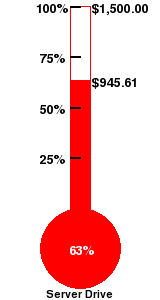

Mikey’s so hipped on his vision of “Flint, the Lost Paradise” that I think he’s finally flipped his cork.
Part of the problem with light rail is that many cities, particularly the farther West you go, are not nearly as centralized as, say, NYC or DC, so you can’t just build light rail into the area where all the jobs are from the areas where people live. To make a light-rail system in Greater LA that would actually work, you’d about have to tear the whole city down and rebuild from scratch.
And the big problem with “alternative energies” is that they don’t WORK nearly as well!!! I have engineers all through my family tree, and they tell me repeatedly that the reason we don’t use a lot of solar, wind and such is that they aren’t nearly as efficient or workable as what we’ve got. The left-wingers’ obsession with “nayyy-churr” prevents them from realizing that nukes are probably going to be what saves us.